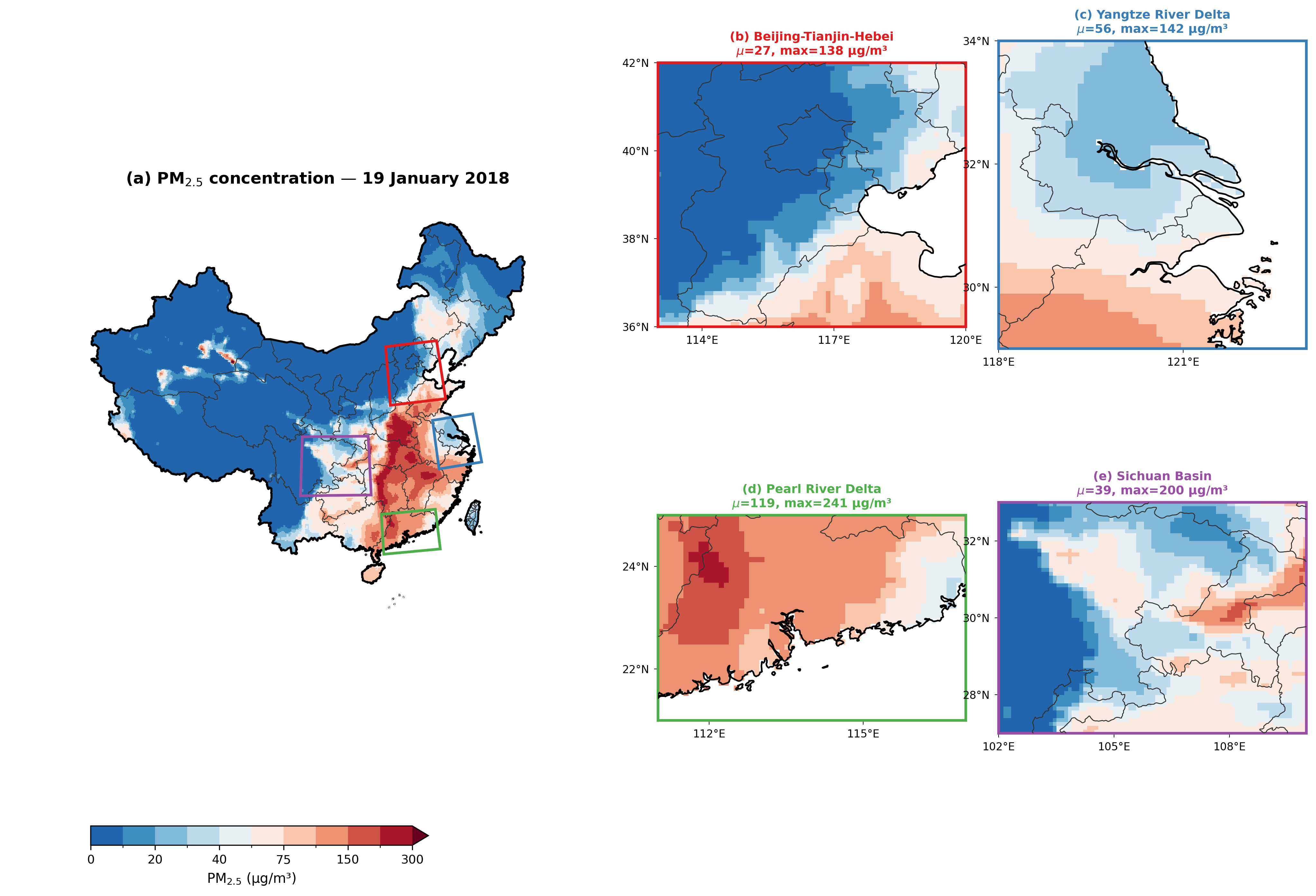
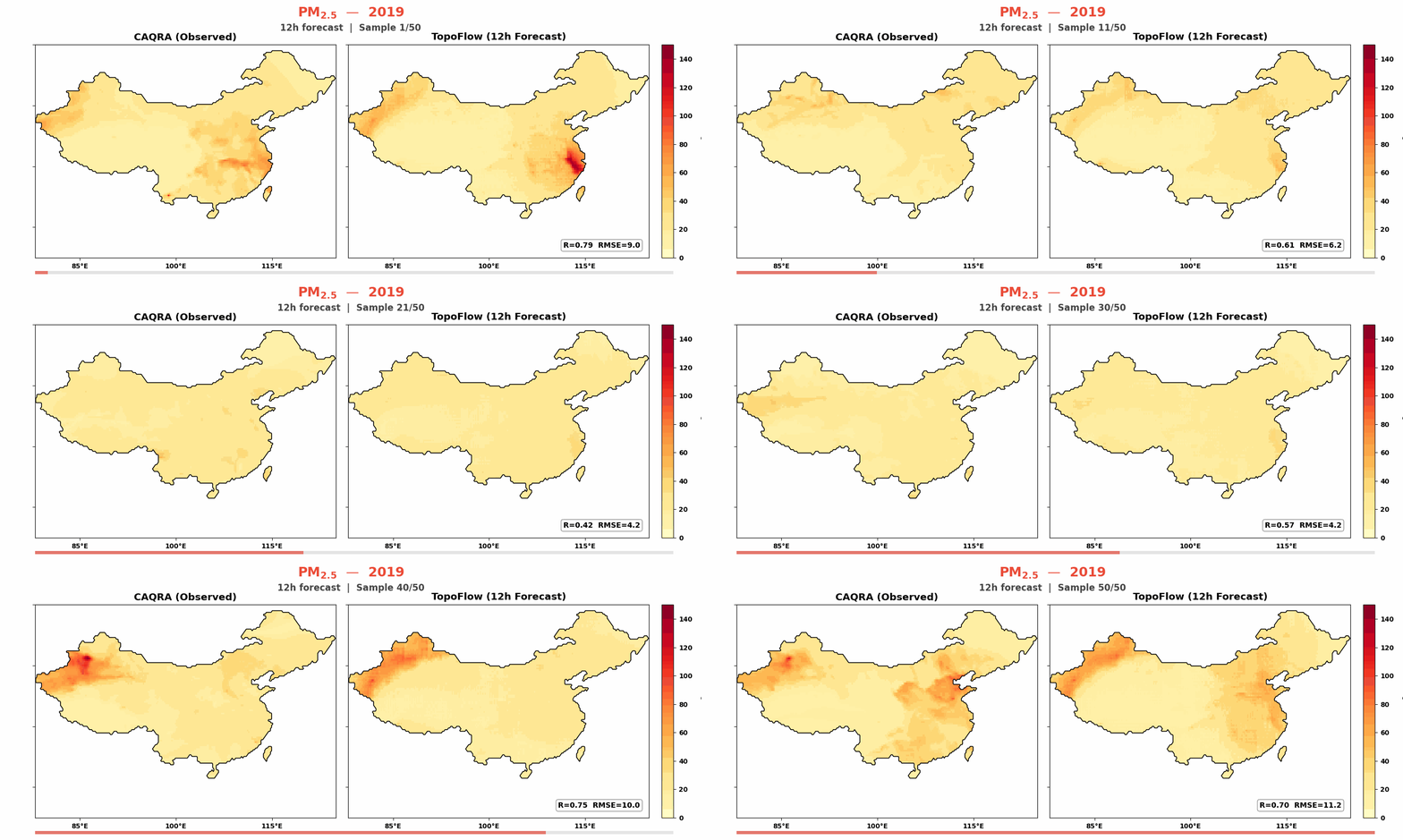
TopoFlow is a Vision Transformer for daily multi-pollutant air quality forecasting over China, extended with two physics-informed components that turn raw atmospheric reanalysis data into accurate, station-validated predictions of PM2.5, PM10, NO2, SO2, O3 and CO.
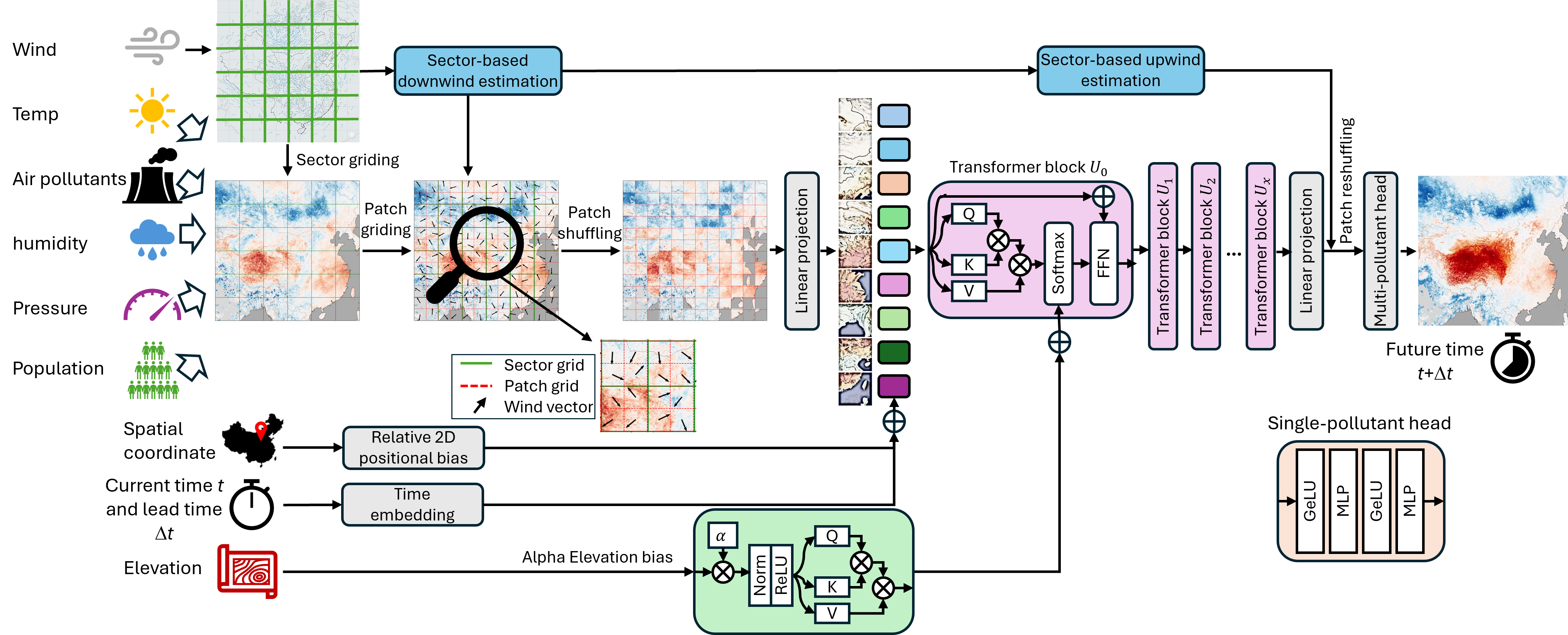
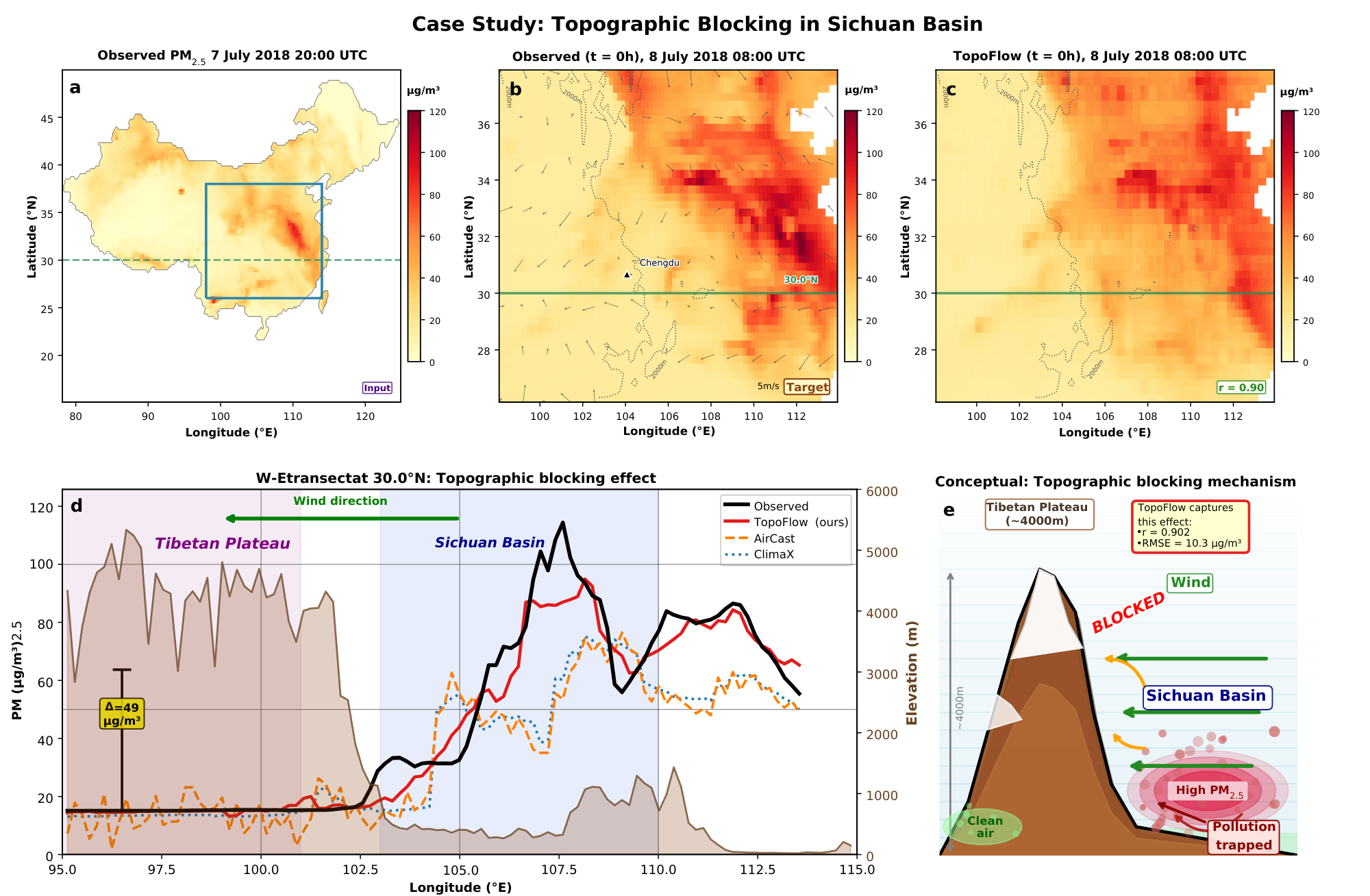
The first contribution is a wind-following patch reordering: instead of feeding patches in fixed raster order, we re-sort them along the prevailing wind so the transformer attends in the direction pollutants actually travel. The second is an elevation-aware attention bias: terrain barriers like the Sichuan Basin trap pollutants, and the model is told about that geometry through a learnable bias informed by digital elevation maps.
I led the model design, training, and evaluation. The paper was published in npj Climate and Atmospheric Science (Nature Portfolio) on 24 April 2026.
npj
Clim. Atmos. Sci.
Nature Portfolio
6
Pollutants
PM, NO2, SO2, O3, CO
ViT
Backbone
physics-informed
LUMI
Trained on
AMD MI250X GPUs
Key ideas
- Wind-following patch reordering. Patches are re-sorted along the prevailing wind so attention flows in the direction pollutants actually move, not in raster order.
- Elevation-aware attention bias. A learnable bias keyed on digital elevation lets the model encode topographic blocking, like the Sichuan Basin trapping haze for days.
- Multi-pollutant, single model. Six species predicted jointly, sharing the atmospheric representation rather than training six separate models.
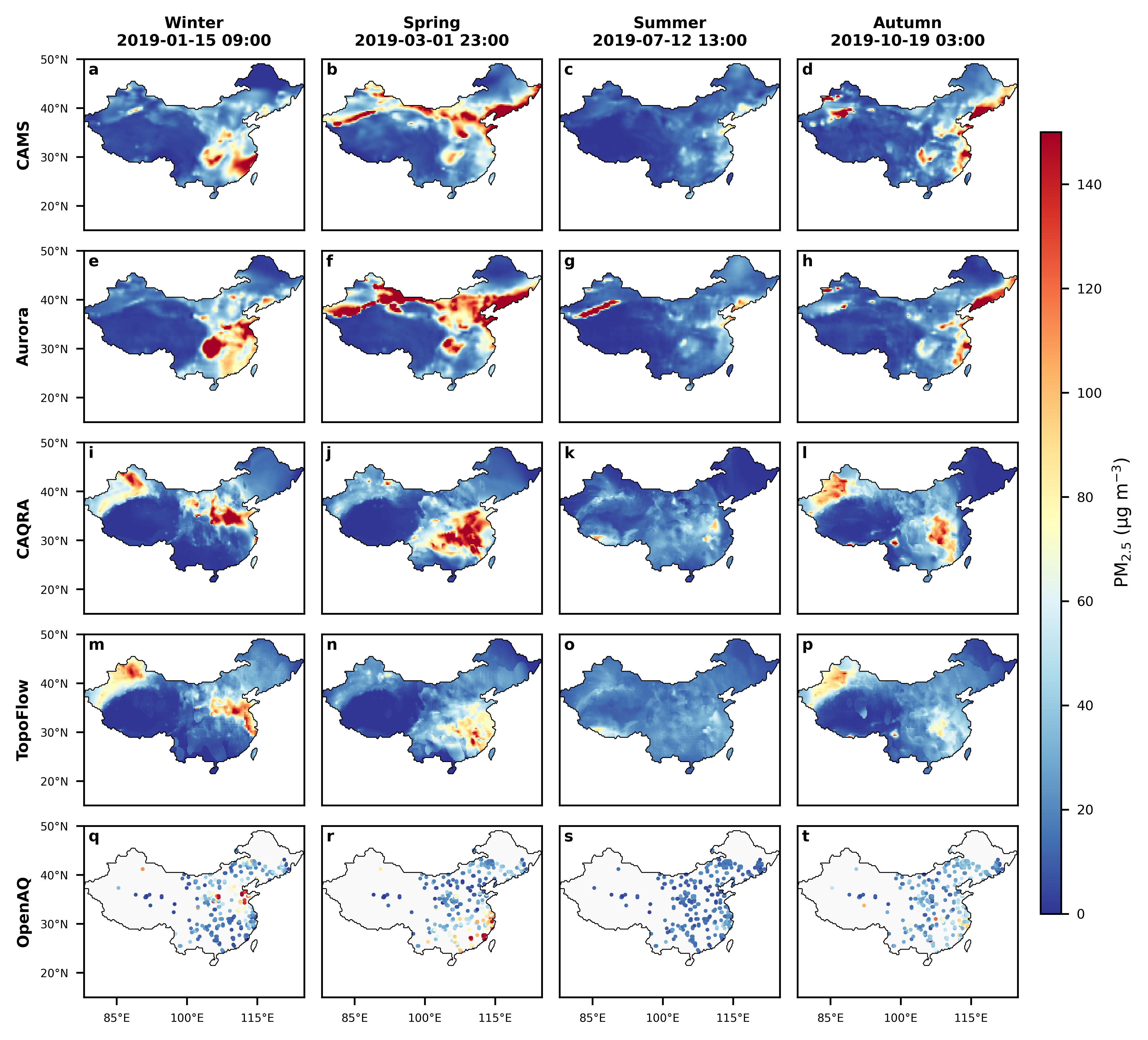
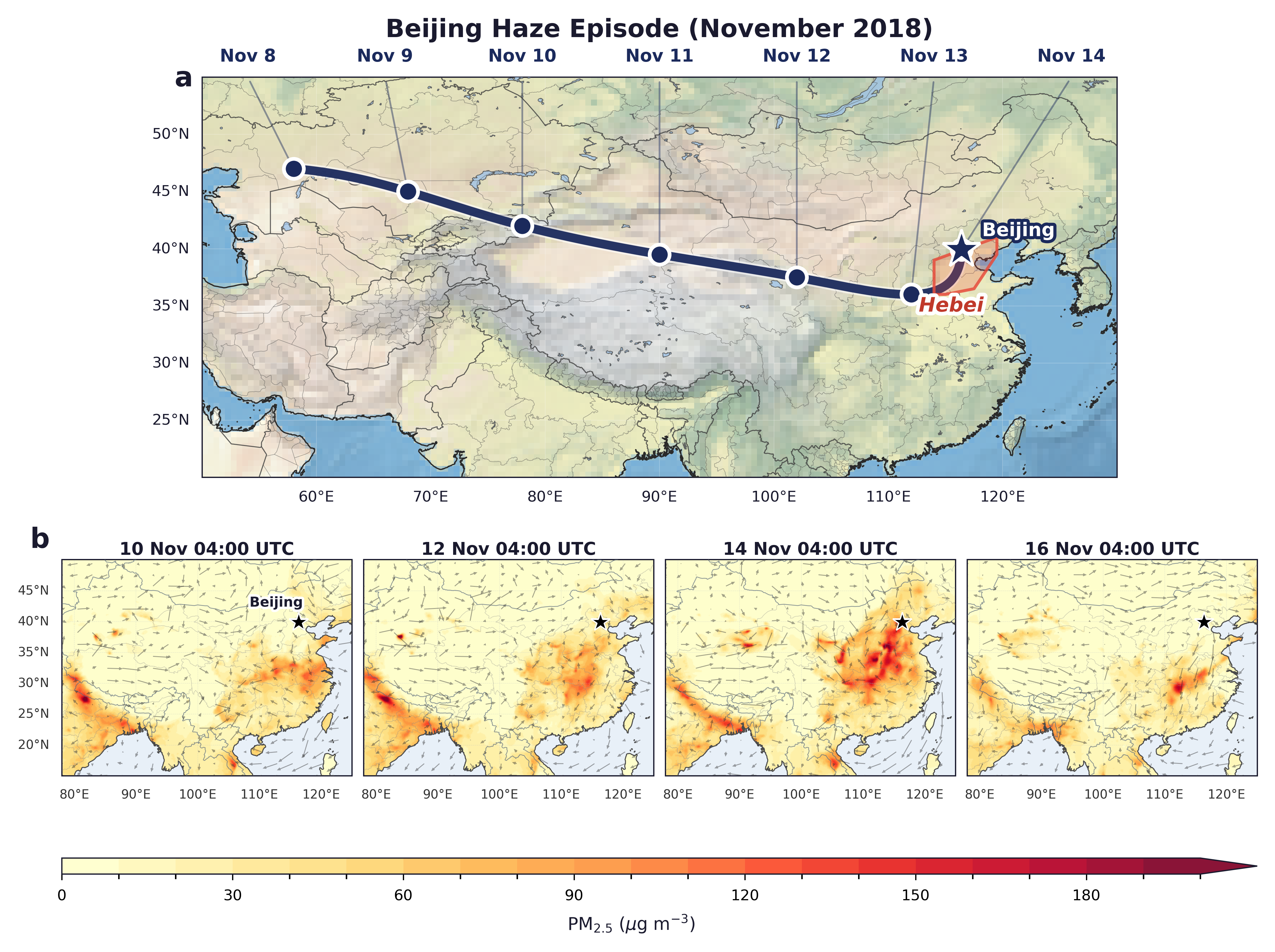
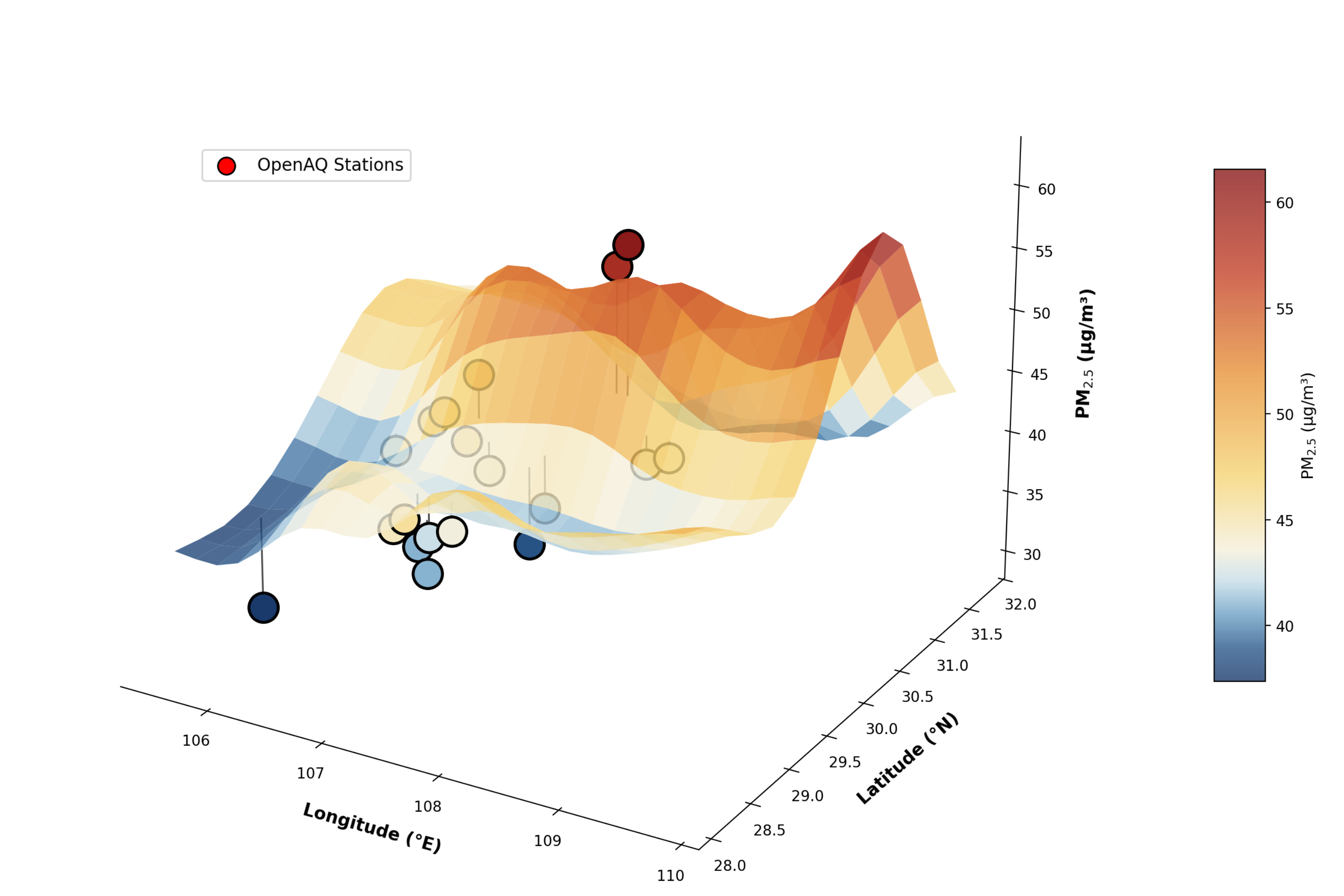
- Validated against ground stations. Compared to CAMS, Aurora and CAQRA on OpenAQ stations, with case studies on the Beijing November 2018 haze and Sichuan Basin blocking.
Visualisations
Resources
Credits
- Authors
- A. Kheder, H. Toropainen, W. Peng, S. Antão, J. Chen, M. Boy, Z.-S. Liu
- Venue
- npj Climate and Atmospheric Science, Nature Portfolio, 2026
- Compute
- LUMI supercomputer (AMD MI250X GPUs)
- Affiliation
- LUT University, Atmospheric Modelling Centre (AMC-Lahti)